An effective tool for improving the control of keys.
What is a Sequence Lock Key Retaining Device?
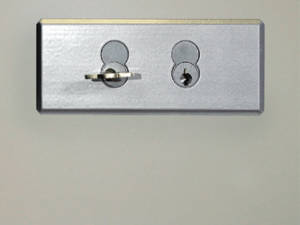
It is a key retaining device that is an effective tool for improving the control of keys. With a sequence lock key retainer, a release key is inserted into the retaining device and rotated. The rotation will allow removal of the retained key, and in turn traps the release key. The release key remains trapped until the retained key is returned and rotated. After this action, the release key can be removed with the retained key being trapped.
Why use a Sequence Lock?
These key retaining devices establish accountability for important keys in a system (ex: master keys, emergency bypass keys, access control, safety lockout, etc.) and dramatically reduce both human mistakes and risk exposure for hierarchy level keys. This key control of put and take system acts as a mechanical sign-out sheet when active.
How do they work?
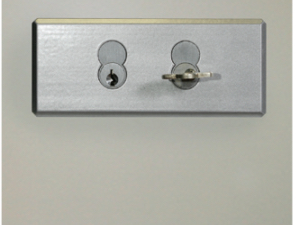
Retained key sits in key retaining device waiting for any authorized user to remove it when needed.
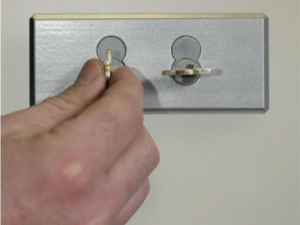
An authorized user inserts their personal identified release key.
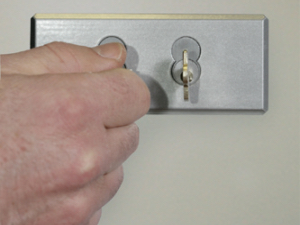
User rotates release key and the higher level retained key is now ready for removal.
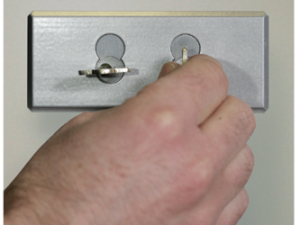
Authorized user removes the previous secured high level key and can use as it is needed.
Authorized user key is retained (held/trapped) until the high level key is returned to its secure position.
Sequence Lock Models
SLLF-2
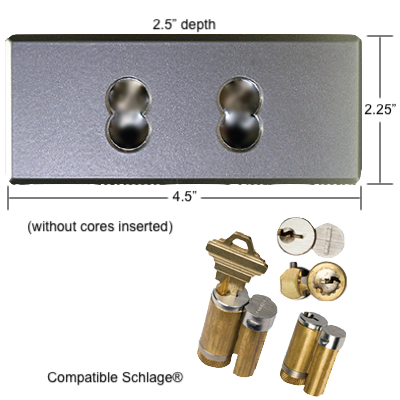
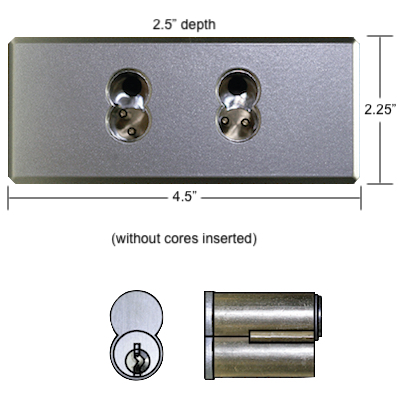
Interchangeable Core Large Format - Schlage®
Accepts all manufacturers Large Format Schlage® design Interchangeable Cores
An effective and mechanical key retainer control device
Solid aircraft aluminum machined housing
Heavy duty rack and gear sequence drive mechanism
Machined T-Slot mounting system
Wall mounting by recessed T-Slot holes (2)
Specifications
Case: Precision Machined from solid aircraft grade aluminum stock
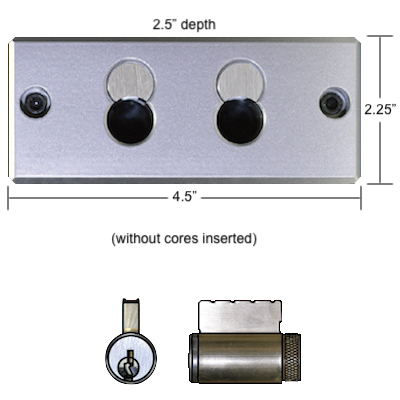
Size: 2.2″ high x 4.5″ long x 2.5″ deep
Weight: 2 lbs.
Finish: Satin Finish
Mounting: Concealed threaded machine screws
Architects & Engineers Specifications
ETI’s Sequence Locks are to be integrated throughout the location or facility and are exclusive to ETI products. The key retaining device shall be used for all key control activities which require remote or special location access by authorized personnel. The device shall be designed whereby rotational retention is activated and controlled with a sequence mechanism which uses rack and gear function for engagement of cylinders. The lock body must be of solid machined aircraft aluminum which incorporates and interlock T-Slide bracket for wall or plate mounting. Final body mounting must use concealed fasteners and/or high security fasteners specified/approved by ETI Products. Overall design will display and function with the collective features of durability, safety, anti-tamper and anti-vandal. Optional colors may be used in aiding in the identification of key control and its application for user and area control.
When you call, you get a real answer. We pride ourselves on our high-level of customer service, treating every account as if it’s the only one we have.
Our Promise.
If a product doesn’t meet your standards, we make it right. That’s our CPI promise.
Solution Focused.
We help you find what actually fits your building. With access to a wide variety of products, we have solutions for all of your security needs.
Time is Money.
Security problems don’t happen on a schedule. We are focused on short lead times and carry a wide variety of products in stock to have something sent out within two business days.